
Struggling With Endurance or Recovery? Breathing for Endurance Might Be What You’re Missing

If you’ve ever hit a wall mid-workout or struggled to recover between efforts, your breathing might be the missing link. This post explores the science and practicality of breathing for endurance—a quiet but powerful skill that transforms performance. From carbon dioxide tolerance to nasal breathing, we’ll unpack why how you breathe may matter more than how hard you train. These tools can help you get more from your movement, recover faster, and stay present in both training and life.
Most of us think about endurance training in terms of mileage, time, and sweat. But breathing for endurance is a powerful, often overlooked tool that can boost your stamina, reduce breathlessness, and accelerate your recovery.
Ever wonder why you run out of steam so fast—even though you’re training regularly? Or why your recovery feels slower than it should be?
It might not be your fitness level. It might be your breathing. More specifically: your body’s CO₂ tolerance—its ability to handle rising levels of carbon dioxide during effort.
Most people think oxygen is the key to better performance. But without enough CO₂ in your blood, that oxygen can’t get where it needs to go. CO₂ is what unlocks the oxygen from your red blood cells, so it can actually reach your muscles.
And here’s the kicker: If you breathe out too fast—especially through your mouth—you dump CO₂ before your body can use it.
This relationship between carbon dioxide, oxygen efficiency and performance, is often overlooked in mainstream training advice.
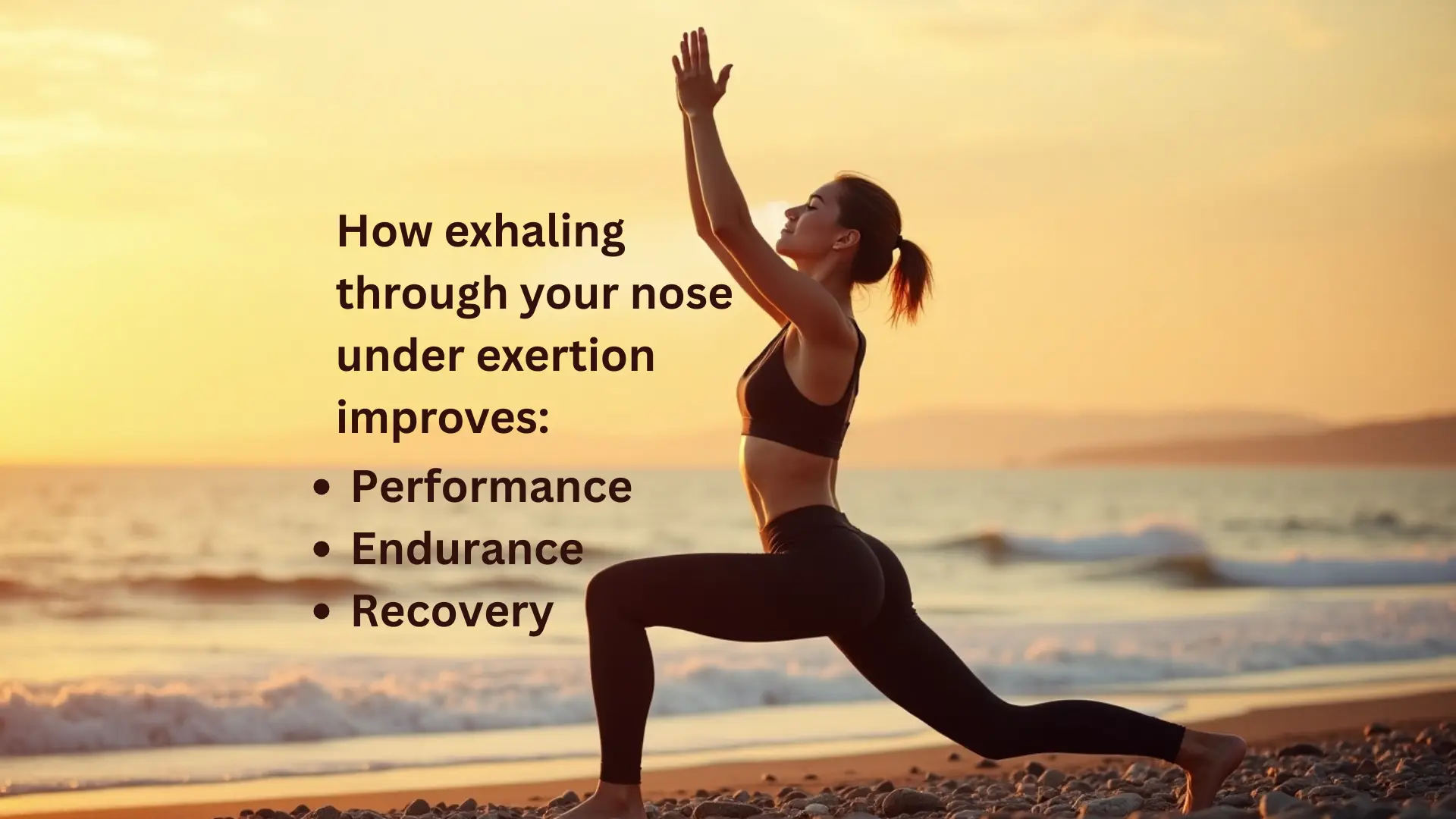
This is why breathing for endurance starts with nasal exhalation. Even when it feels unnatural under exertion, it helps you retain just enough CO₂ to boost oxygen delivery, improve stamina, and recover faster.
Nasal exhalation also does more than support CO₂ levels:
- It keeps your lungs slightly more inflated between breaths, making your next inhale more efficient
- It encourages diaphragmatic control, which naturally engages your core
- This core engagement is essential for spinal stability and safety under physical load
Endurance breathing isn’t about deep, dramatic inhales—it’s about better control. You train your body to use less air more efficiently, keep your nervous system calm, and unlock real performance gains.
💡 Why Breathing for Endurance Should Be a Fitness Goal
⚡ Oxygen Efficiency
Your muscles don’t just need oxygen—they need access to it. When CO₂ levels rise slightly, oxygen is more easily released from red blood cells. This process (the Bohr effect) is essential for performance and recovery.
Nasal breathing slows your exhales, retains more CO₂, and supports this oxygen delivery. Mouth breathing, on the other hand, works against you.
🦱 Better Endurance and Performance
How does breathing improve endurance?
Breathing for endurance means tolerating more CO₂ without panicking. As you adapt, your breathing becomes calmer—even under pressure. You won’t feel breathless as quickly, so you can push harder, for longer.
Nasal breathing for better endurance might feel uncomfortable at first, especially during cardio or strength training. But that discomfort is part of the adaptation. Over time, it teaches your body to perform better with less effort.
🧘 H3 Mental Focus & Calm Under Stress
The breath affects your brain as much as your body. Breathing for endurance builds mental clarity and focus by calming the nervous system—even under load.
💆 H3 Improved Recovery from Exercise
Endurance breathwork activates your parasympathetic system faster. That means less over-breathing, better circulation, and quicker recovery between sets and after sessions.
❤️ H3 Lower Blood Pressure and Stress
Nasal breathing and CO₂ training help reduce your resting heart rate and blood pressure, while improving blood flow. You build not only strength—but long-term resilience.
Imagine being able to breathe calmly through your nose while jogging or lifting—without gasping, without panic. Imagine finishing your session with energy left over, not wiped out. This is what breathing for endurance gives you: performance without exhaustion.
In our outdoor sessions, we’ve seen how simple breathing techniques in Southsea Portsmouth help people regulate without needing intensity.
How CO₂ Tolerance Works in the Body
🧪 The Role of Carbon Dioxide
CO₂ does more than trigger the urge to breathe:
- It helps release oxygen from red blood cells
- Keeps blood vessels open and relaxed
- Activates the parasympathetic nervous system for faster recovery
- Supports better brain function and mental clarity
How to Test and Train Breathing for Endurance capacity
🔸 Step 1: The Control Pause Test
Try this simple test:
- Breathe in and out normally through your nose
- After the exhale, pinch your nose and hold your breath
- Time how long it takes until you feel the first urge to breathe
- That number (in seconds) is your Control Pause
Interpret your result:
- Under 20s = Low
- 20–40s = Moderate
- 40s+ = High
Use it as a monthly progress tracker.
Step 2: Breath Training Techniques
These techniques help improve your endurance breathing and CO₂ tolerance:
- Nasal breathing during workouts
- Slow exhales (e.g., 4-in, 8–10-out)
- Breath-hold walking or jogging
- Box breathing (4-in, 4-hold, 4-out, 4-hold)
Step 3: Integrate Breath Into Your Routine
- Begin warmups and cooldowns with nasal breathing
- Add short post-exhale breath holds during walks
- Track Control Pause once per month
- Try breath ladders during strength sets (e.g., 2 breaths per rep, then 1)
You can combine breath control with strength training for more sustainable fat loss and efficient effort.
Breathing and Fitness Recovery
Better Post-Workout Oxygen Delivery
CO₂ helps keep blood vessels open post-training, sending oxygen and nutrients where they’re needed—quicker recovery, fewer energy crashes.
↺ Faster Parasympathetic Activation
A calm breath after training tells your nervous system: “We’re safe. It’s time to recover.” The sooner this happens, the faster your body heals and resets.
🧪 DOMS Reduction Support
Endurance breathwork won’t stop soreness entirely, but it helps reduce inflammation, boost circulation, and support tissue repair—especially useful for DOMS.*
🏋️ How Breathing Improves Performance and Endurance
🚀 More Efficient Energy Use
Nasal breathing and CO₂ training let you perform better without burning out. You’ll delay fatigue and maintain output longer.
🧠 Mental Clarity in Intensity
High effort often comes with mental fog. But trained breathers stay focused and sharp—because their nervous system isn’t overloaded.
🦱 Lower Breathing Rate = Longer Workouts
Breathing for endurance helps you breathe less frequently but more effectively—boosting session quality while conserving energy.
❤️ How Breath Affects Blood Pressure
Over-Breathing and Blood Pressure
Mouth breathing and over-breathing reduce CO₂ levels, causing blood vessels to narrow and pressure to rise. It’s a silent stressor.
How Endurance Breathing Helps
CO₂-rich blood supports relaxed vessels and a calmer nervous system. Over time, breath training can help lower blood pressure and reduce stress symptoms.*
These methods are also backed by clinical advice on endurance breathing from the Cleveland Clinic.
🧘 H3 Daily Practices That Support BP
- Breath-hold walking
- Long, nasal exhales
- Box breathing in the morning or evening
Conclusion: Why You Should Train Your Breath
If you’re doing everything right but still feel breathless, slow to recover, or mentally scattered in workouts—don’t add more reps. Start with your breath.
Breathing for endurance doesn’t require fancy equipment—just awareness, nasal breathing, and practice. The benefits show up fast: more stamina, faster recovery, better focus.
If you’re starting from scratch or need something calming, explore gentle breathwork practices to build awareness and control.
Start now: Try nasal exhalation in your next workout. Do the CO₂ Control Pause test. Notice the difference. Your breath might be your most powerful training tool yet.
You can Comment or ask questions on this post in Instagram.
We would love to hear from you!
Want to explore more about how fascia influences movement, mood, and memory?
Visit our fascia-informed movement and emotional wellbeing homepage to dive deeper into the science and practice.