
Gentle Breathing Practice to Support Your Core, Calm Your Mind, and Energise Your Day

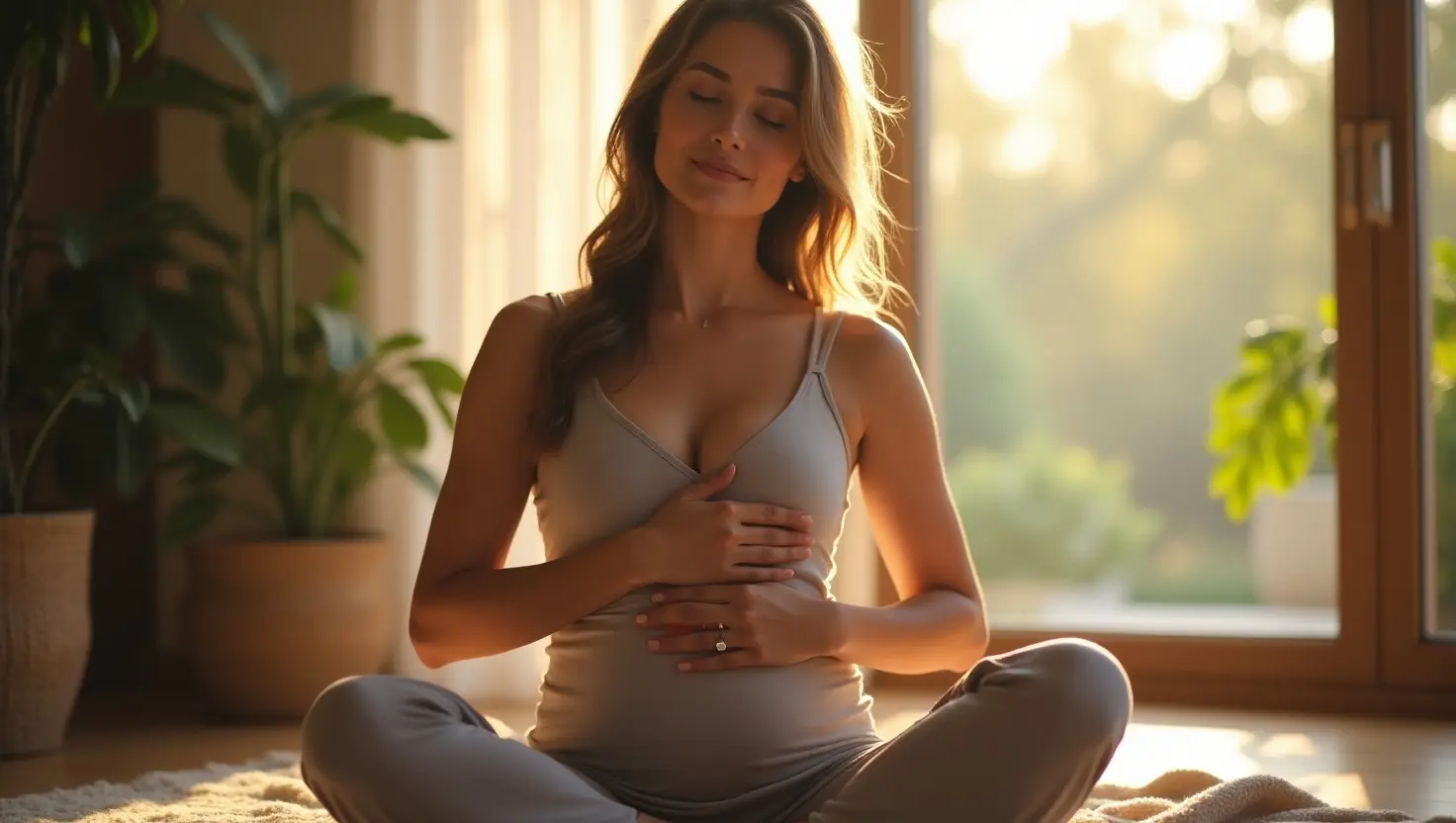
Do you feel tense, low on energy, or disconnected from your body?
Feeling drained or anxious? One of the simplest yet most powerful ways to reset your energy and rebuild your core is through gentle breathing techniques for women. This isn’t just about relaxation—conscious breathwork supports your fascia, nervous system, and postural strength in ways that few other practices can. Whether you’re coming back to your body after childbirth or just trying to find a calmer rhythm in your day, this guide introduces easy, restorative breathing methods that anyone can try—no pressure, no perfection, just five minutes of focus that could change everything.
Do you feel tense, low on energy, or disconnected from your body? Discover how our gentle breathing techniques for women can help you feel grounded again.
Whether you’re juggling young children, managing teenage chaos, or simply feeling the cumulative effects of stress and modern life—your breath may be the missing piece.
Many of the women we train with (and a fair few men too) come to us with core weakness, back tension, or trouble switching off at the end of the day. Not all of it needs to be solved through high-impact training or big lifestyle overhauls.
These gentle breathing techniques for women aren’t about perfection or pushing—just a consistent, supported practice anyone can try.
Sometimes, the most powerful shift begins with breath.
Why Gentle Breathing Techniques for Women Matter (and Why This Version is Different)
You’ve probably come across breathwork before. It’s been used for centuries in yoga, meditation, and various wellness traditions. But so much of what you’ll find online is either too intense, too vague, or disconnected from what real people—especially women navigating physical recovery or everyday stress—actually need.
In this post, Irina Akhmetzianova, co-founder of our training collective, shares a gentle, accessible version of two well-known breathing techniques. While these methods are widely practised across the yoga world, Irina has structured them here in a way that’s supportive for those returning to their bodies after time away, postnatally, or simply needing to build focus and resilience in everyday life.
This postnatal breathwork sequence is especially helpful if:
- You’ve had children (recently or years ago) and feel disconnected from your core
- You’re struggling to build consistency or focus
- You’re often in a state of overdrive or burnout
- You want to support your fascia and nervous system without “pushing harder”
- You’re starting to rebuild your core strength gently
It’s also perfect to layer onto your strength, yoga, or fitness regime—or to start reconnecting with your body again after time away.
You can also deepen your breathing for endurance to go beyond relaxation and support physical performance.
Gentle Breathing Techniques for Women
Shared by Irina Akhmetzianova, to help you prep for fitness and your general wellbeing.
This 5-minute sequence offers gentle breathing techniques for women navigating core recovery, fatigue, or daily stress.
This Breathing Practice is not recommended if your blood pressure is high.
- Preparation:
Sit comfortably with your spine upright. Rest your hands on your knees, relax your shoulders. Close your eyes if you like. Take a few calm, natural breaths. - Soft Kapalabhati (light version)
– Inhale gently through the nose.
– Begin light, short exhalations through the nose by softly pulling the belly inward.
– Let the inhalations happen naturally.
– Do no more than 10–15 breaths.
– Finish with a deep inhale and a slow, relaxed exhale.
– No breath retention after inhale.
– You can do 1–2 rounds with a rest in between. - Calm Bhastrika (light version)
– Inhale through the nose gently but actively.
– Exhale through the nose with slightly more force, but without tension.
– Keep the rhythm slow and steady — about 6–8 breaths per minute.
– After 10 breaths, pause briefly and naturally after the exhale (optional breath retention after exhale only, no more than 3–5 seconds).
– Repeat 1–2 rounds, resting in between. - Closing:
– Sit quietly for a few minutes with eyes closed.
– Observe your breath and enjoy the sense of lightness and calm.
Important Notes:
– Do not practise if your blood pressure is high at the moment.
– Best done in the morning, on an empty stomach or 2 hours after eating.
– Stop immediately if you feel dizzy or uncomfortable.
– In the beginning, practise under guidance if possible.
– This does not constitute medical advice. You are responsible for your own health and safety. If you have any concerns about your breathing or core, please consult your healthcare provider.
‼️‼️‼️ This version is for those with normal blood pressure.
What gentle breathing techniques for women can help with
Breathing exercises to reconnect with your core
Each breath gently activates the diaphragm and deep abdominal muscles. This helps build inner core awareness—especially vital for women post-childbirth, or anyone with long-term core neglect. If you’re doing strength or resistance training, this kind of breathing helps re-engage your foundation.
Fascial hydration and body reconnection
The diaphragm is a fascial bridge between the upper and lower body. Gentle, rhythmic breath is one of the safest ways to “wake up” tense or disconnected areas, particularly in the thoracic spine, abdomen, and hips.
Mental reset and energy lift
These techniques clear mental fog—ideal for women exploring what are the best breathing techniques for stress and core strength. A few minutes in the morning or mid-afternoon can reset your whole day.
H3: Nervous system regulation
By slowing and balancing the breath, you train your nervous system to shift from ‘fight or flight’ into a more grounded, parasympathetic state. Over time, this makes it easier to handle stress without feeling overwhelmed.
The NHS also recommends simple diaphragmatic breathing exercises that can help reduce stress and support the nervous system
You may also like to read about:
Postnatal core recovery tips
Reconnecting with your core after years of disconnect
How stored tension affects breath and fascia
Combining hip and breath awareness for more freedom
Our approach goes beyond cardio with integrating yoga for mobility to protect fascia and boost recovery during fat loss training.
Try it and let us know how it feels
We hope these gentle breathing techniques for women offer a calm anchor in your day. We’d love to hear how this practice lands for you—whether you’re new to breathwork or returning to it.
We’re continuing the conversation over on Instagram. Head to our page, find the post with the same title, and let us know in the comments: What did you notice in your body, breath, or focus after trying this?
You might inspire someone else to take their first breath, too. 💛
You can Comment or ask questions on this post in Instagram.
We would love to hear from you!
Want to explore more about how fascia influences movement, mood, and memory?
Visit our fascia-informed movement and emotional wellbeing homepage to dive deeper into the science and practice.